The Object
”The Object” podcast explores the surprising, true stories behind museum objects with wit and curiosity. An object’s view of us.
Listen on:


Episodes
Aug 9, 2021
Aug 9, 2021
23 min
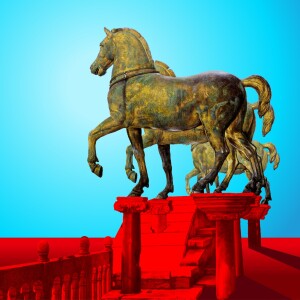
In the early 1800s, the four famous bronze horses of Venice are restored to their place atop St. Mark's Basilica, after a long and humiliating absence. But when American artist Charles Caryl Coleman arrives in Venice, in the 1870s, his celebrated painting of the horses exposes some clues to their real origins. A story of empire and theft, and a betrayal that forever changed the world.
You can see the painting by Coleman, The Bronze Horses of San Marco, in the collection of the Minneapolis Institute of Art: https://collections.artsmia.org/art/2607/the-bronze-horses-of-san-marco-charles-caryl-coleman
This episode features a clip from the podcast Curious Objects, from Antiques magazine. Listen to more at https://www.themagazineantiques.com/podcast/
Jul 12, 2021
Jul 12, 2021
23 min
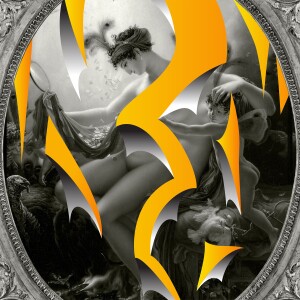
Mademoiselle Lange is the first celebrity actress in France, as famous for her lovers as her looks. But when the French Revolution roils the country, she is forced to fight for her life, and meets her match in a rising artist who is commissioned to paint her portrait. A picture that will upend both their lives--and the art world--in dramatic fashion.
You can see the scandalous portrait mentioned in this episode, "Portrait of Mlle. Lange as Danae," here in the collection of the Minneapolis Institute of Art: https://collections.artsmia.org/art/1727/portrait-of-mlle-lange-as-danae-anne-louis-girodet-de-roussy-trioson
Jun 7, 2021
Jun 7, 2021
26 min
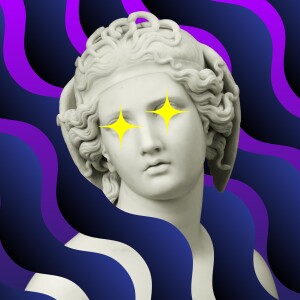
In 1852, Harriet Hosmer packs her pistol, her anatomy degree, and two pictures of a sculpture she made and moves to Rome. There, among other “emancipated women” in the expat colony, she becomes one of the world’s most famous artists. But it’s the spirit world that truly calls to her, the realm of the dead that she channels through clairvoyance and seances. So what happens when she answers?
You can see her remarkably tender sculpture of Medusa, referenced in this episode, in the collection of the Minneapolis Institute of Art: https://collections.artsmia.org/art/81074/medusa-harriet-goodhue-hosmer
Learn more about “Supernatural America,” the exhibition organized by the Minneapolis Institute of Art and featuring Hosmer’s Medusa, opening June 2021 at the Toledo Museum of Art:
https://new.artsmia.org/exhibition/supernatural-america-the-paranormal-in-american-art

May 10, 2021
May 10, 2021
24 min
When Frida Kahlo dies, in 1954, she is soon forgotten. And then, suddenly, she seems to be everywhere: on magnets, puzzles, underwear, flip-flops. How did this remarkable artist become an international icon, an emoji, a figure of fervid devotion? And what does she mean to those who believe?
You can see Yasumasa Morimura's "An Inner Dialogue with Frida Kahlo," mentioned in the show, in the collection of the Minneapolis Institute of Art: https://collections.artsmia.org/art/109149/an-inner-dialogue-with-frida-kahlo-morimura-yasumasa
Have you heard Frida Kahlo talk? Neither has anyone else--not since she died, in 1954. Unless it turns out that this is actually her, on a recording surfaced a couple years ago by the National Sound Library of Mexico: https://www.youtube.com/watch?v=HjTA2Dd8U9o
Apr 12, 2021
Apr 12, 2021
24 min
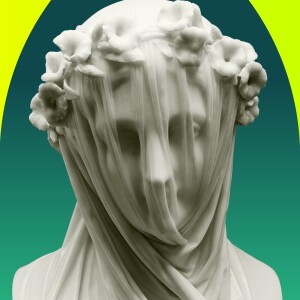
They are illusions, no more real than someone being sawed in half onstage. Yet the veiled ladies that Raffaelle Monti sculpts in the 1800s are very real to him. Poignant symbols of an identity he’s forced to conceal, even as they make him famous. To launch Season 3, it’s a story of pride and prejudice and dreams just out of reach.
Here you can see Monti’s Veiled Lady, c. 1860, in the collection of the Minneapolis Institute of Art: https://collections.artsmia.org/art/12092/veiled-lady-raffaelo-monti
Feb 8, 2021
Feb 8, 2021
20 min
When the young Italian artist Amedeo Modigliani moves to Paris, in the early 1900s, he soon meets a very talented (and very married) Russian poet. What happens when art and love come together, as the rest of the world is falling apart?
You can see one of Modigliani’s iconic Head sculptures here, from the collection of the Minneapolis Institute of Art: https://collections.artsmia.org/art/1502/head-amedeo-modigliani
(Spoiler alert) You can see a close-up of the secret fossil discussed on the show here: https://new.artsmia.org/stories/art-secrets-the-starfish-in-her-face/
Dec 31, 2020
Dec 31, 2020
17 min
As the page finally turns on 2020, enjoy this bonus episode on the New Year's illustrations made by Winslow Homer for Harper's Weekly magazine in 1869. At a moment surprisingly similar to our own, the American artist captured something of the feeling then, even as his life--and art history--was about to change forever.
You can see the illustrations in the collection of the Minneapolis Institute of Art here: https://collections.artsmia.org/search/new%20year's%20homer
Nov 30, 2020
Nov 30, 2020
27 min
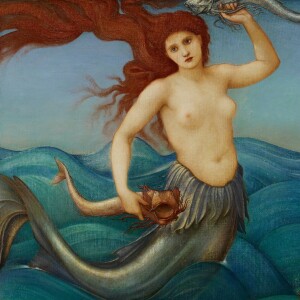
Mermaids had been surfacing in art for thousands of years when, in the 1880s, Edward Burne-Jones began painting them as avatars of a radical new female identity in the corseted Victorian era. A story of desire and danger as legendary as the creatures themselves.
You can see one of Burne-Jones' early mermaid paintings, "A Sea-Nymph," at the Minneapolis Institute of Art: https://collections.artsmia.org/art/99878/a-sea-nymph-edward-coley-burne-jones. His best-known mermaid work, "The Depths of the Sea," is at the Fogg Museum at Harvard University: https://harvardartmuseums.org/art/298102
Special thanks to Grace Nuth and Sarah Peverley for sharing their expertise on this episode.
Grace Nuth is a writer, artist, and fine-art model living in central Ohio. She is the senior editor of Enchanted Living magazine and the co-author of The Faerie Handbook. She regularly writes on a variety of topics at her blog at www.gracenuth.com.
Sarah Peverley is a professor of English at the University of Liverpool and a BBC New Generation Thinker. She is writing a cultural history of mermaids, and is the author of several radio programmes, media features, and podcasts about merfolk. You can follow her work at her website (www.sarahpeverley.com), on Twitter at https://twitter.com/Sarah_Peverley, and on Instagram at https://www.instagram.com/sarahpeverley/.
Oct 26, 2020
Oct 26, 2020
27 min
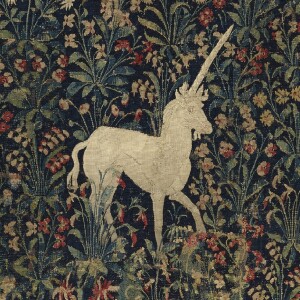
Artists have captured unicorns for thousands of years, and for most of that time people thought they were both magical and real. What can an imaginary creature tell us about ourselves? What did we lose when we stopped believing? And why do we still love them anyway?
You can see unicorns in art through the ages in the collection of the Minneapolis Institute of Art, including this tapestry from the late Middle Ages: https://collections.artsmia.org/art/531/allegorical-millefleurs-tapestry-with-animals-belgium
Thanks to Natalie Lawrence and Marguerite Ragnow for sharing their expertise on this episode.
Lawrence is a freelance writer with a PhD from the University of Cambridge on exotic monsters in early modern Europe. She is currently writing a book on the history of monsters. Find her work on her blog (https://themanticore.wordpress.com) and her website (https://www.nataliejlawrence.com).
Ragnow is a historian and curator of the James Ford Bell Library (https://www.lib.umn.edu/bell) at the University of Minnesota, a collection about trade and exploration, featuring rare books, maps, and manuscripts. She is working on a book about unicorns.
Sep 21, 2020
Sep 21, 2020
20 min
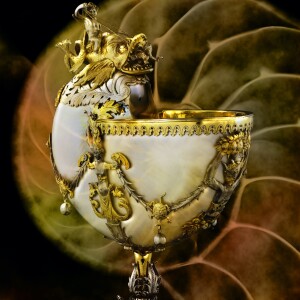
From narwhals to nautilus shells, dragon eggs to mermaid hands, the obsession with oddities in the Age of Discovery may seem, well, odd. But did the study of outliers, in the early version of museums, help make us the rational creatures we are today?
See the nautilus shell cup from this episode here: https://collections.artsmia.org/art/111675/nautilus-shell-cup-germany